Product Listing Image Set: What Every Ecommerce Page Should Include
Build a product listing image set with hero, lifestyle, detail, scale, feature, and checklist images for higher-confidence shoppers.
A listing image set is a sales sequence
A product listing image set should guide shoppers from recognition to confidence. The first image creates clarity, the middle images answer questions, and the final images reinforce fit, use, or value.
Instead of thinking in single images, plan the set like a short product demo. Each image should earn its place by reducing uncertainty or increasing desire.
Use a six-image baseline
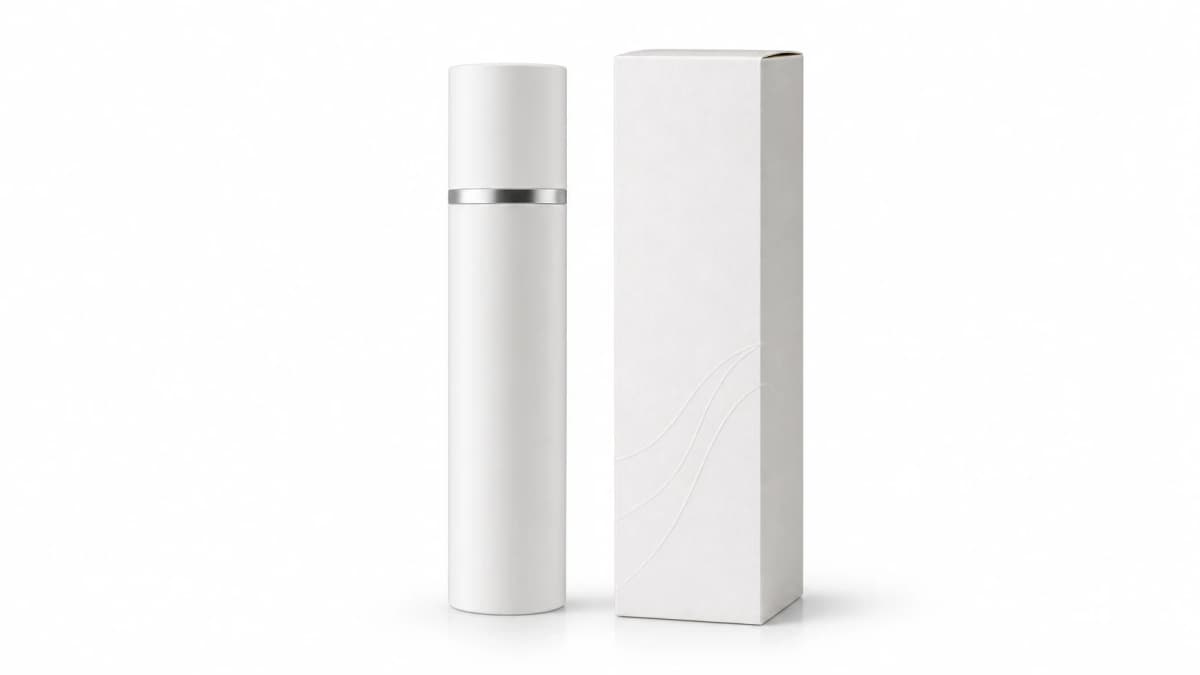
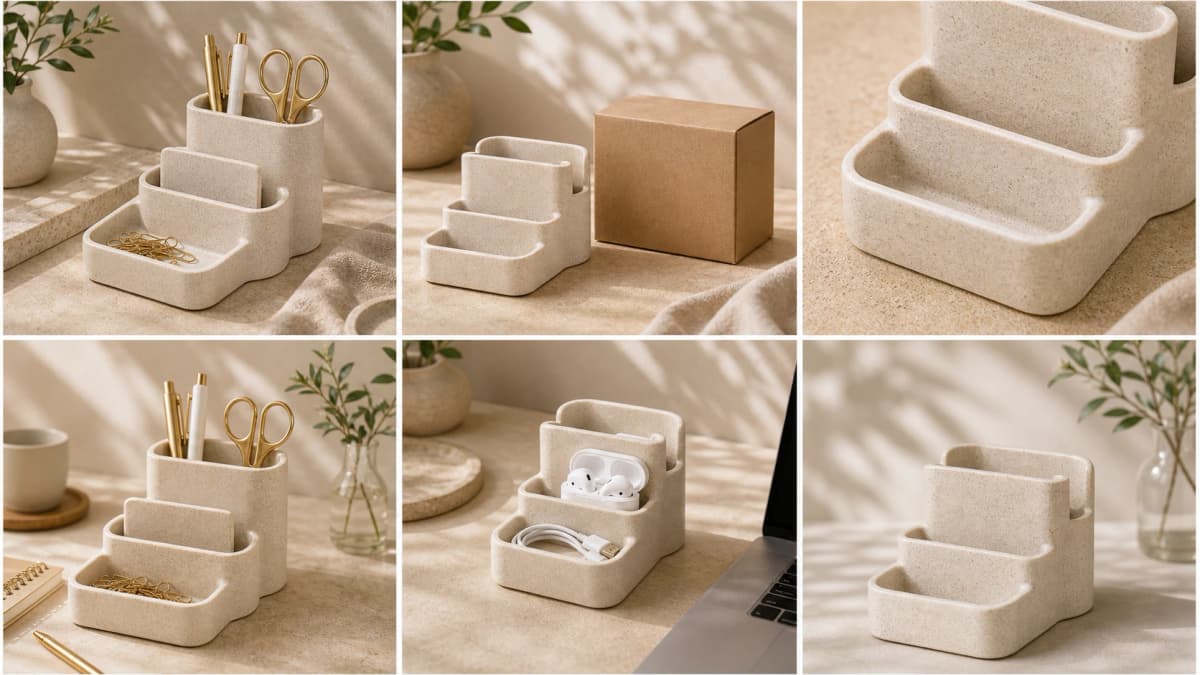
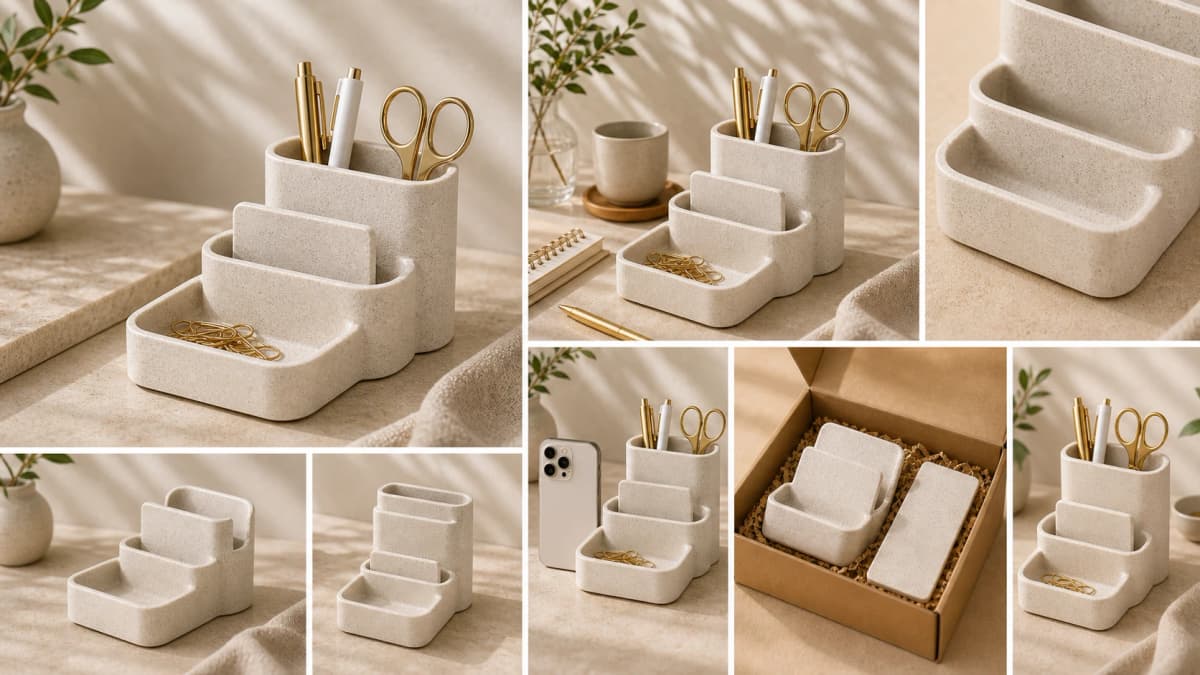
Most ecommerce products can start with a six-image baseline: hero, alternate angle, lifestyle, detail, scale, and packaging or bundle. This structure works across Shopify, Etsy, Amazon secondary images, and many direct-to-consumer stores.
The order can change by category. Apparel may need fit and fabric earlier. Home decor may need scale earlier. Consumables may need ingredients, texture, or routine placement.
- Hero image for instant product recognition.
- Alternate angle for shape and depth.
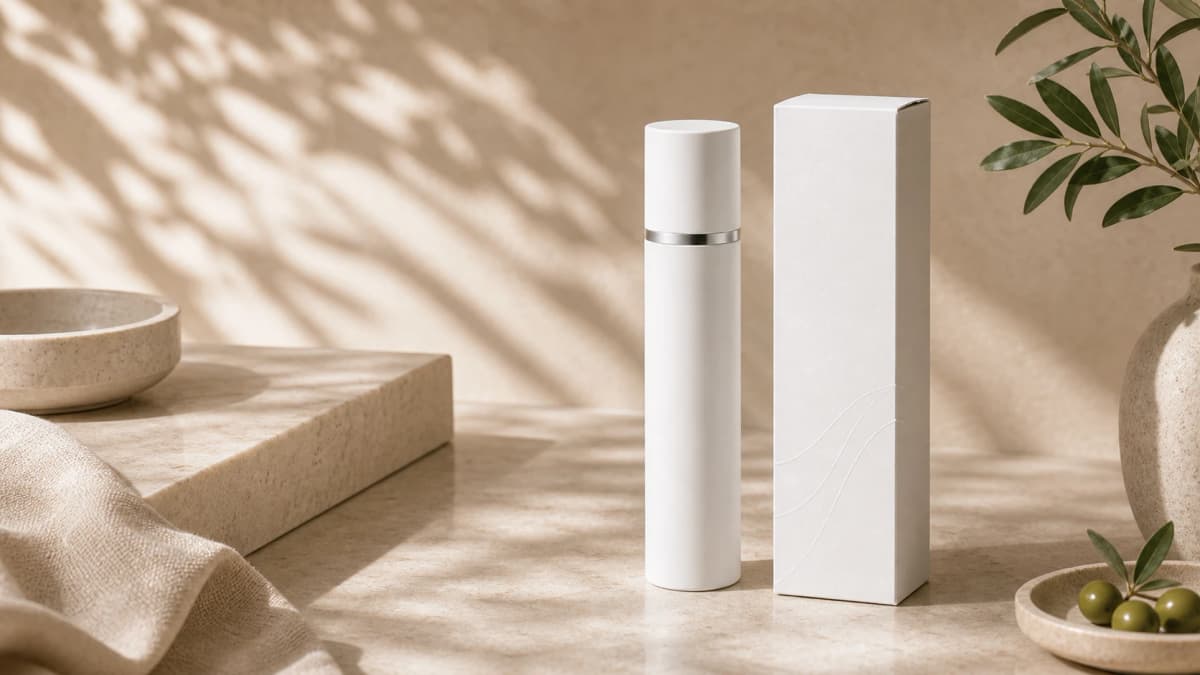
- Lifestyle image for context and aspiration.
- Detail image for material or quality proof.
- Scale image for size confidence.
- Packaging, bundle, or included-items image for expectation setting.
Turn features into visual proof
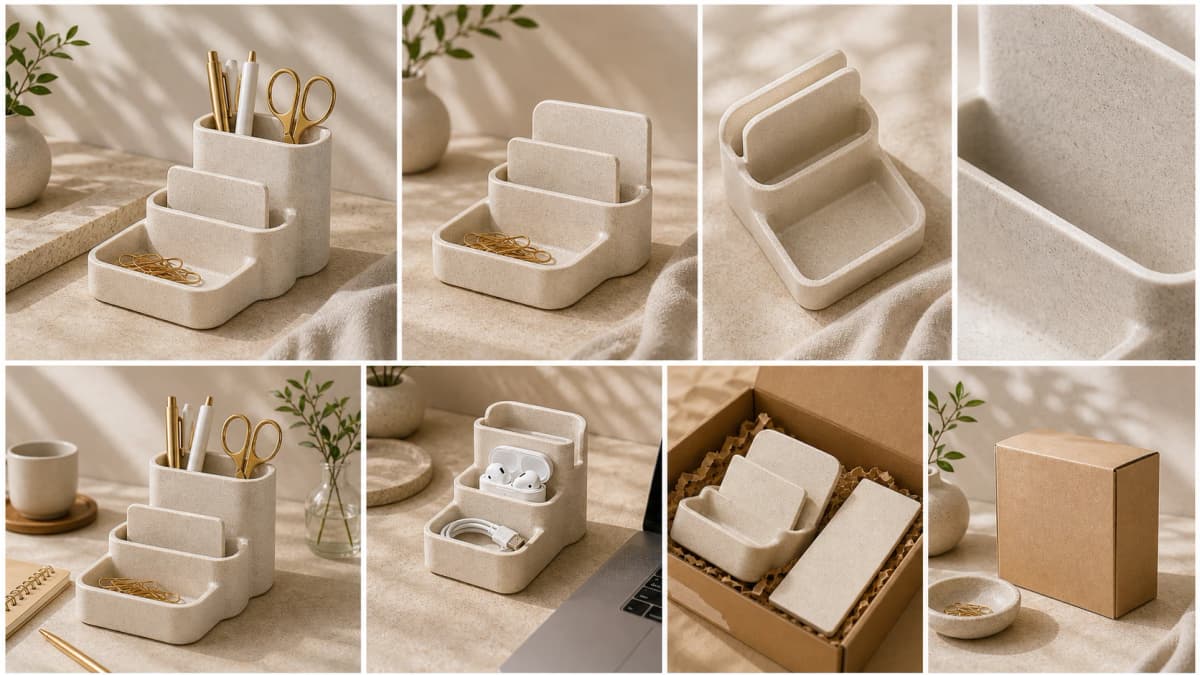
Listing images should not repeat the product description word for word. They should prove the claims visually. If a backpack has compartments, show the layout. If a candle has a textured ceramic vessel, show the surface. If a serum is lightweight, show a texture smear.
Use short text labels only where the selling point is hard to see without guidance, and avoid clutter. The product should remain the main subject.
Create channel-specific crops from the same set
A good product listing image set can support more than one channel. Export square images for marketplaces and collection grids, 4:5 crops for paid social, and wider crops for banners or email.
When you generate with AI, ask for scene variants that can survive cropping. Keep important product details away from the edges and maintain enough negative space for channel needs.
Run a pre-publish checklist
Before publishing, review the full image set at thumbnail size and zoom size. Shoppers experience both: they click from a small image, then inspect details on the product page.
The set is ready when the product is accurate, the sequence covers major objections, the images feel consistent, and no image introduces a claim the product cannot support.
- Product color and shape are consistent across all images.
- Every included item is accurate.
- Scale is believable.
- No label text is distorted or invented.
- The first image is clear in a small thumbnail.
Frequently asked questions
What images should be in a product listing image set?
A practical set includes a hero image, alternate angle, lifestyle scene, detail shot, scale image, and packaging or bundle image. Add feature images when the product needs more explanation.
Is one product photo enough for a listing?
Usually no. One image may show the product, but it rarely answers questions about scale, material, use, packaging, and quality.
Can one image set work across different marketplaces?
Yes, if you plan crops and compliance needs early. Keep a clean hero image, then adapt secondary images for each platform.
Build a complete listing image set
Generate product visuals for hero, lifestyle, detail, scale, and feature images from one upload.